38 years after the founding of Hamas
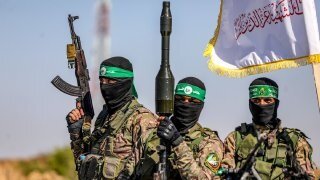
TEHRAN – Hamas affirms that Operation al-Aqsa Flood marked a pivotal moment in the Palestinian people’s struggle against occupation.
The Palestinian resistance movement underscored Israel’s failure to achieve its objectives despite its massive war machine.
Hamas made the statement as it marked the 38th anniversary of its founding. It commemorated the anniversary amid the ongoing genocidal assault on Gaza, which has targeted more than two million Palestinians, and as Israel’s crimes continue in the occupied West Bank and occupied al-Quds (Jerusalem).
Hamas was founded in the midst of the first Palestinian intifada (uprising) in 1987 amid widespread Israeli aggression against the Palestinian people. Armed resistance has become a natural response to the Israeli regime’s brutal occupation.
Experts point out that the regime’s occupation and heinous acts in the Palestinian territories will always produce resistance because they deny people basic rights, dignity, and control over their own lives.
The Zionist occupation regime shapes where and how Palestinians are allowed to live and travel. Checkpoints, land confiscation, home demolitions, arrests, and military raids are not abstract policies. When these conditions persist for decades, resistance becomes a natural social response.
History shows that prolonged military rule generates pushback everywhere. Palestinians are no different. When political avenues are blocked, and diplomacy produces no meaningful change, the indigenous people of the land wage armed resistance to fulfill their duty as enshrined under international law.
Aggression also fuels resistance by reinforcing collective identity. Each military assault, civilian death, or act of displacement deepens shared trauma and shared memory. This creates a sense that survival itself requires standing against the occupying power as is widely evident in the Gaza genocide.
The international approach to the Palestinian issue often ignores the political roots of their plight. Israeli forces may, at times, disrupt resistance temporarily, but they do not address why it exists, nor do they eliminate the armed struggle forever.
Elsewhere, Hamas categorically rejected all forms of guardianship or mandate over the Gaza Strip or any part of occupied Palestinian land, warning against complicity in displacement schemes and attempts to reengineer Gaza in line with the “occupier’s plans”.
It stressed that the Palestinian people alone have the right to decide who governs them and are capable of managing their own affairs. They also possess the legitimate right to defend themselves, liberate their land, and establish a fully sovereign independent state with al-Quds as its capital.
Hamas emphasized that the Zionist regime’s genocide and collective starvation in Gaza as well as its illegal behaviors in the West Bank and occupied al-Quds are systematic and well-documented and will not be erased by the passage of time.
The resistance movement reaffirmed that the occupation regime’s genocidal war, use of starvation as a weapon, and violations of sovereignty across Palestine and other Arab nations have definitively established Israel as a rogue entity that poses a genuine threat to regional stability and international peace and security.
This, Hamas said, necessitates decisive international action to restrain the Zionist regime, stop its terrorism, isolate it, and end its occupation.
The movement expressed appreciation for the efforts and sacrifices of all resistance forces and free people in the region and beyond who have supported the Palestinian people and their struggle for freedom.
Khalil al-Hayya, head of the movement, affirmed that Hamas’s priorities at this stage include ending the genocidal war, completing the entry of humanitarian aid, and fully implementing the ceasefire agreement. He also stressed that resistance is a legitimate right.
Al-Hayya stated that the movement’s leadership has adopted clear priorities for the coming phase to confront the challenges.
Chief among these, he said, is continuing efforts to stop the genocide, particularly by ensuring the flow of aid and reopening the Rafah crossing.
He noted that the anniversary of the Hamas foundation comes amid a fundamentally different reality for the Palestinian cause, as the Palestinian people endure extremely difficult days due to the Zionist regime’s aggression and genocide.
Al-Hayya paid tribute to the movement’s senior commander Raed Saad “who dedicated his life to his faith and homeland, struggled in the path of God, and lived while being relentlessly pursued by the occupying regime.”
He also highlighted the suffering of Palestinians, who face hardship, deprivation, and ongoing attempts to erase their identity.
Despite these hardships, al-Hayya said, the long-dominant Zionist narrative has collapsed, and new convictions have emerged among rising elites. He argued that the Palestinian people and their resistance have achieved major strategic gains, including breaking the myth of strategic deterrence, exposing the Zionist regime’s claims, bringing Israeli leaders and soldiers before international courts, and revealing the regime’s true image to the world.
The Hamas chief also commemorated the “martyrs of the Islamic world” during this phase, foremost among them martyr Hezbollah Secretary-General Sayyed Hassan Nasrallah and martyr Iranian commander Mohammad Saeed Izadi (Hajj Ramadan).
Leave a Comment